
San Francisco Silversmiths · Since 1977
San Francisco Silver Replating
- Sterling & Silverplate -
A Legacy of
Silver Restoration & Repair Expertise
Biro & Sons is a family-owned San Francisco silversmith founded in 1977, using generations of experience and old-world craftsmanship for silver replating of family heirlooms, flatware sets, and serving pieces to their original glory. We work with sterling silver and silver-plated pieces right in our San Francisco shop.
Our services cover the full range of silver replating and repair: repairing dents, scratches, loose handles, and broken finials on flatware, trays, and hollowware. When silverplate wears through to the base metal, we replate in-house with silverplate or sterling silver.
We have decades of experience replating, repairing, and restoring family heirlooms.
Whether you’re in the Bay Area or shipping in from across the country, we’re here to help. We also accept mail-in silver repairs from across the U.S. and Europe.
What Is
Silver Replating?
Most silver things you find in your home today, from flatware to picture frames, candlesticks to vases, are silverplated. The manufacturer makes them from a base metal like copper, nickel, or brass, then electroplates them with a layer of silver.
Regular use, washing, and polishing often wear away that silver layer. We often see this on handles, fork tines, backs of spoons, and rims of serving trays.
When a silverplated piece needs replating and comes into the Biro & Sons shop, we first inspect it to make sure it’s structurally sound and worth the investment. Once that’s complete, we strip any leftover silverplate to ensure even replating.
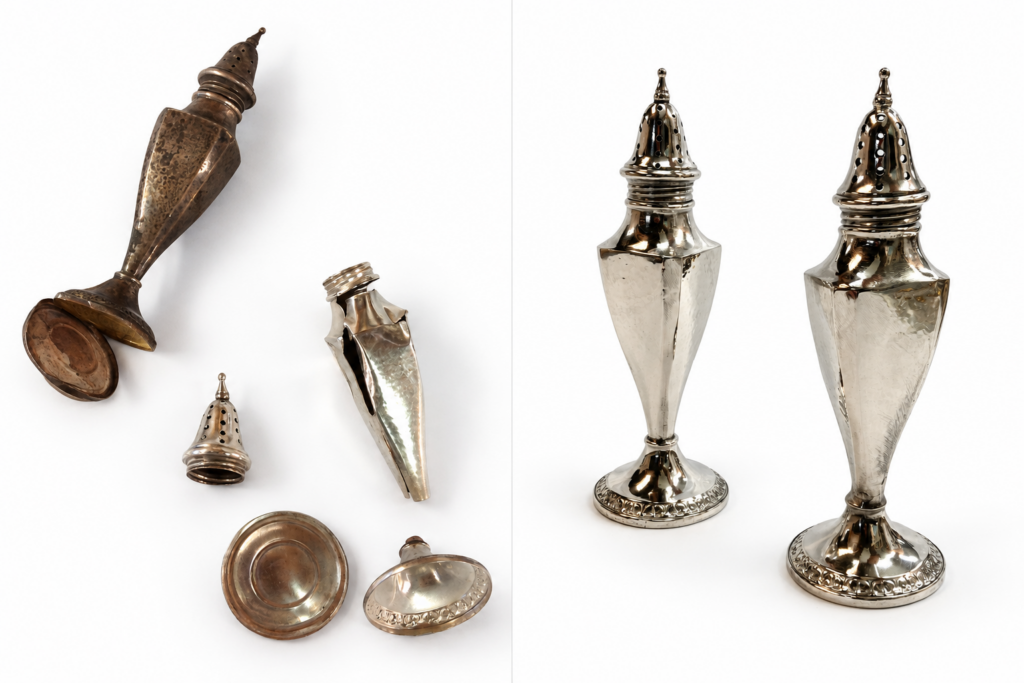
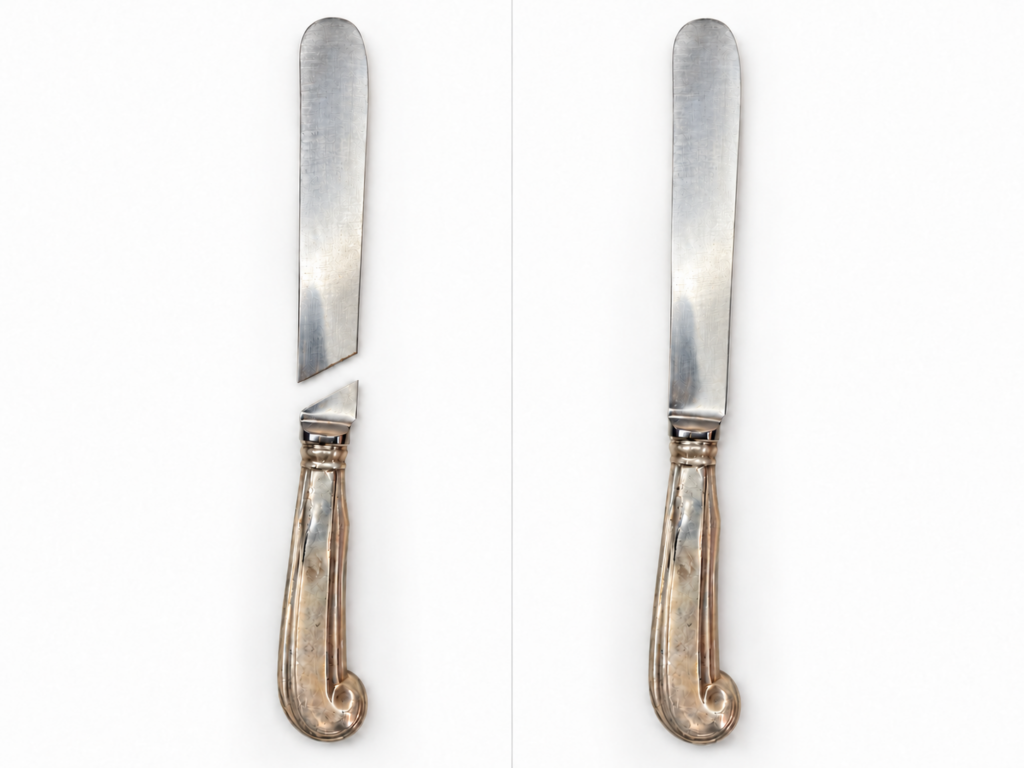
We carefully fix dings or bends using old-world craftsmanship and tools. Loose handles are repaired to ensure structural integrity. We remake lost handles to match the piece’s design. Deep scratches are buffed out.
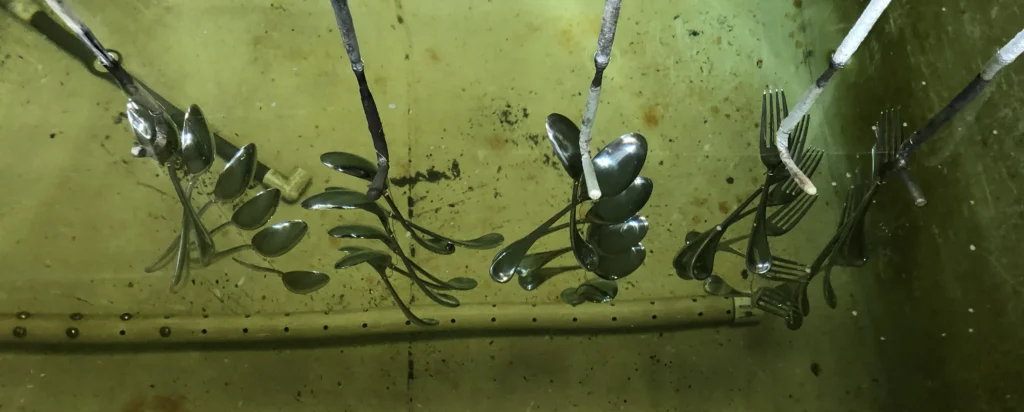
Once those steps are completed, we place the piece into a silver-plating solution charged with an electrical current that bonds the silver to the surface. Buffing and polishing are the final steps so our customers receive a like-new piece.
How to Tell if
Your Piece Needs Replating
If you can see the base metal, the silverplate is worn out, and it’s time to replate.
If a piece looks yellowish, the base metal is brass. Anything pink, orange, or coppery means it’s made of copper. If you see a gray or yellowish-white color with a duller, flatter shine than the silver around it, the base metal is nickel silver. That one is the most difficult to spot. Look under a good light for patches that don’t reflect as brightly.
Where to look first:
- Flatware: the backs of spoons, fork tines, handle tips, or knife edges.
- Trays and Platters: raised rim, feet, and center.
- Tea and Coffee Sets: handles, spouts, lid knobs, and the bottom edge
- Candlesticks: the top rim and base edge
- Anything Decorative: the raised parts of patterns that get polished more than the recessed parts.
There’s a substantial difference between worn silverplate and tarnish or patina. Tarnish is a dark layer that sits on top of silver. Worn silverplate means the silver is gone. You can tell the difference by looking for the color of the worn spot or by rubbing a small spot with a silver polishing cloth. If the spot turns silvery, then it’s tarnish.
Many view tarnish as a quiet layer of history, and wish to maintain the look. Others wish to have it removed. Expert silversmiths know how to master the art of patina.
Biro & Sons handles all replating work in-house, using the best materials available and old-world techniques to bring every piece back to its original form.
We’re always available to talk if you have any questions.
We’re Here to Help
We welcome you to see the Biro & Sons’ workshop.
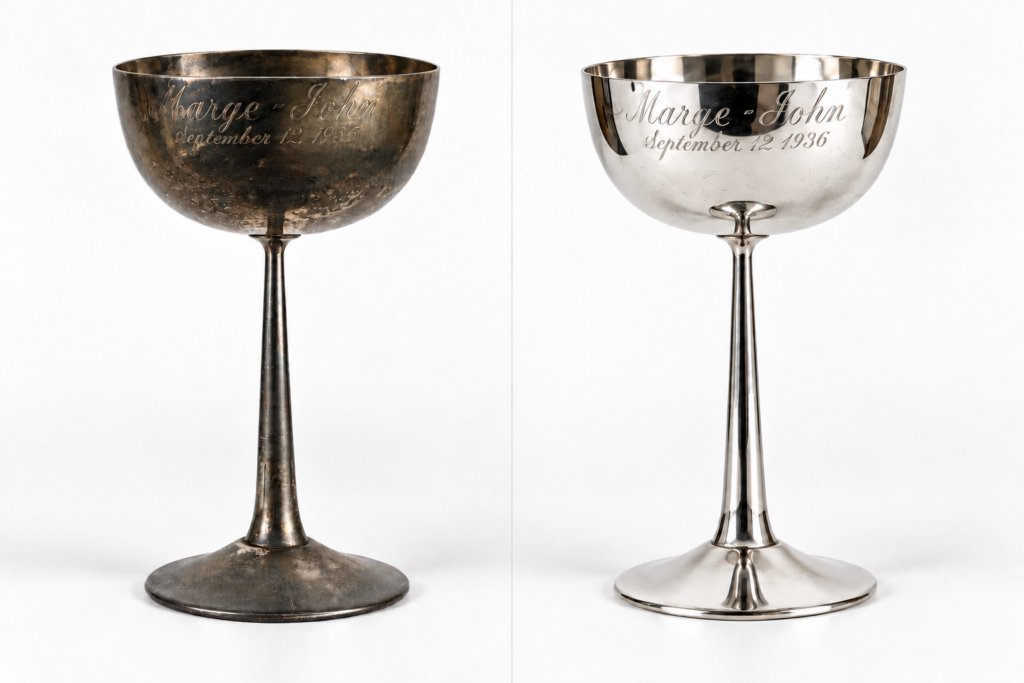
Silver Replating and Repair
Before & After Gallery
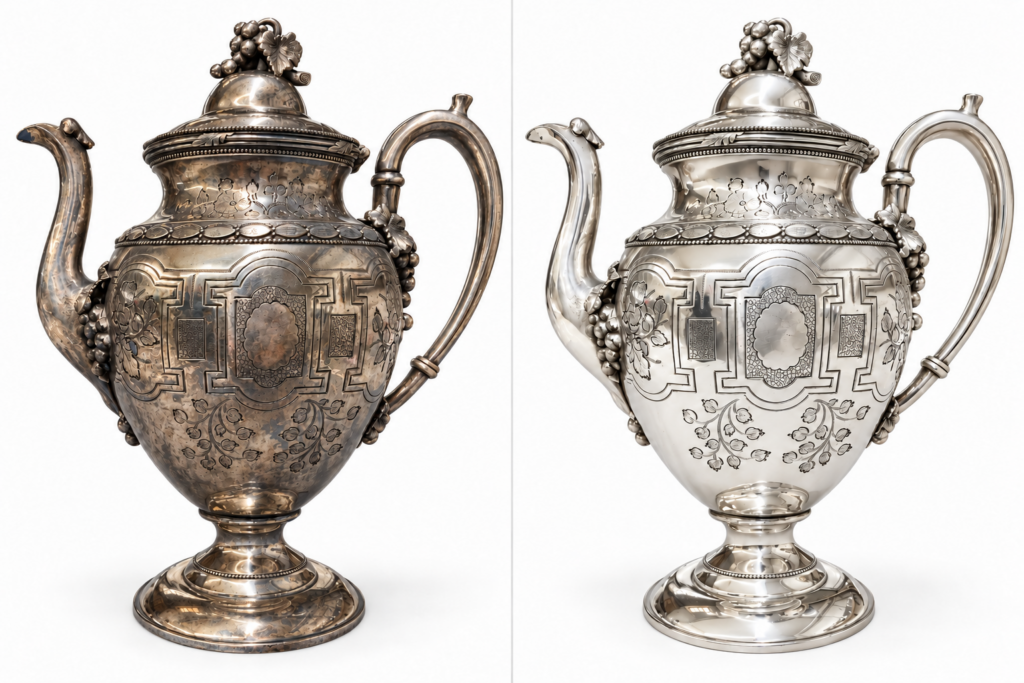
Silver Replating and Repair
FAQs
Q: Do you work with Sterling Silver and Silverplate?
A: Yes! Biro & Sons has a legacy of restoring and repairing sterling silver and silverplated tableware, holloware, flatware, vintage tea sets, serving trays, silver photo frames, and candelabras.
Q: How can I tell the difference between sterling silver and silver plating?
A: Look for marks on the item. If you see “EP” or “EPNS,” that means it’s electroplated nickel silver. “EPC” means electroplated copper. Often, if you see a manufacturer’s name (Oneida, Reed & Barton, or Rogers, for instance) without the word “sterling,” it’s silver plate. Sterling pieces are marked with “925” or “.925. Identifying antique silver is easier than you might think.
Q: Can you replate a silver item where copper is showing?
A: Yes, after inspecting the piece to ensure it is fundamentally sound and that replating it will deliver excellent results. Your complete satisfaction is our goal, and we’ll let you know if restoring an item to its original condition isn’t realistic.
Q: I can see yellow spots on my flatware. What does that mean?
A: It just means that the base metal of your item is brass.
Q: How can I tell if it’s tarnish or if the silver plating is worn out?
A: If you’re seeing places with a duller, flatter shine than the silver around it, the base metal is nickel silver, and it’s harder to tell the difference between worn silver plating and tarnish. The easiest thing to do is rub a small spot with a silver polishing cloth. If the spot turns silvery, then it’s tarnish.
Q: Is it worth the cost of replating something?
A: Sentiment and use are your two guideposts for determining if it’s “worth it” to replate a silver item. It also depends on what repairs or replacements are needed before replating. If you’re thinking about replating your everyday flatware, it may be more expensive to replate than replace. If it’s your Grandmother’s heirloom tea set, it may be worth it.
Q: Can you repair dents and scratches?
A: Yes, more often than not. We have repaired hundreds of sterling silver and silverplated items back to their original majesty. It’s best to send us a picture or bring it in, and we can discuss.
Q: Do you work with customers outside of San Francisco?
A: Yes! We receive packages from across the United States and Europe for silver restoration and repair. First, fill out our Repair by Mail form with clear photos and a description of what’s happening. Then we schedule a free consultation, provide packing instructions, and start work as soon as we can. We will update you as we go and arrange return shipping when it’s done.
Q: How much does silver replating cost?
A: The best way to get an accurate number is to send us a photo. We’ll send you a written estimate before any work begins. Every project starts with a free written estimate, since cost depends on the piece and the work needed.